
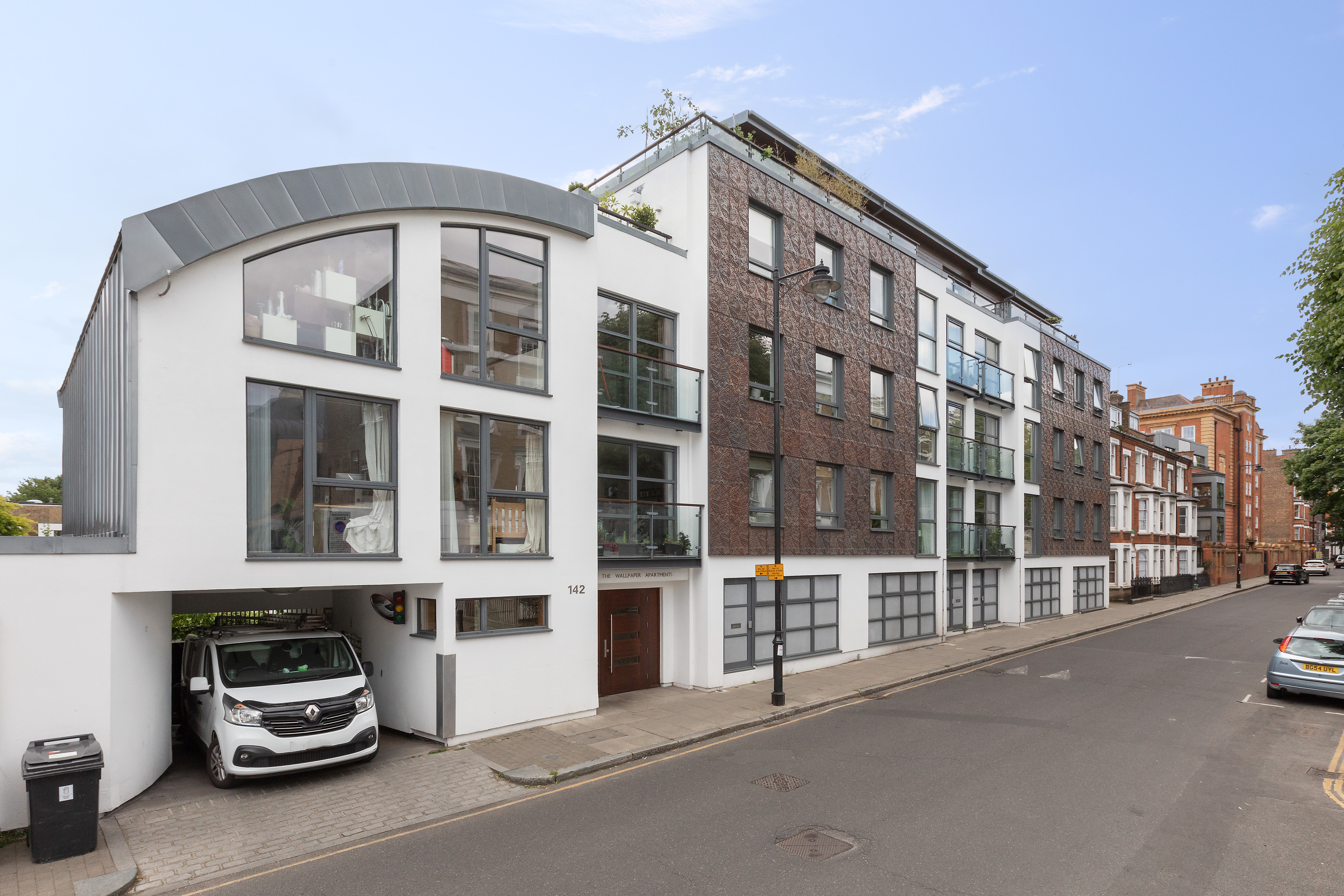
Over the past decade, the UK property market has developed an increasingly noticeable divide between the performance of flats and houses.
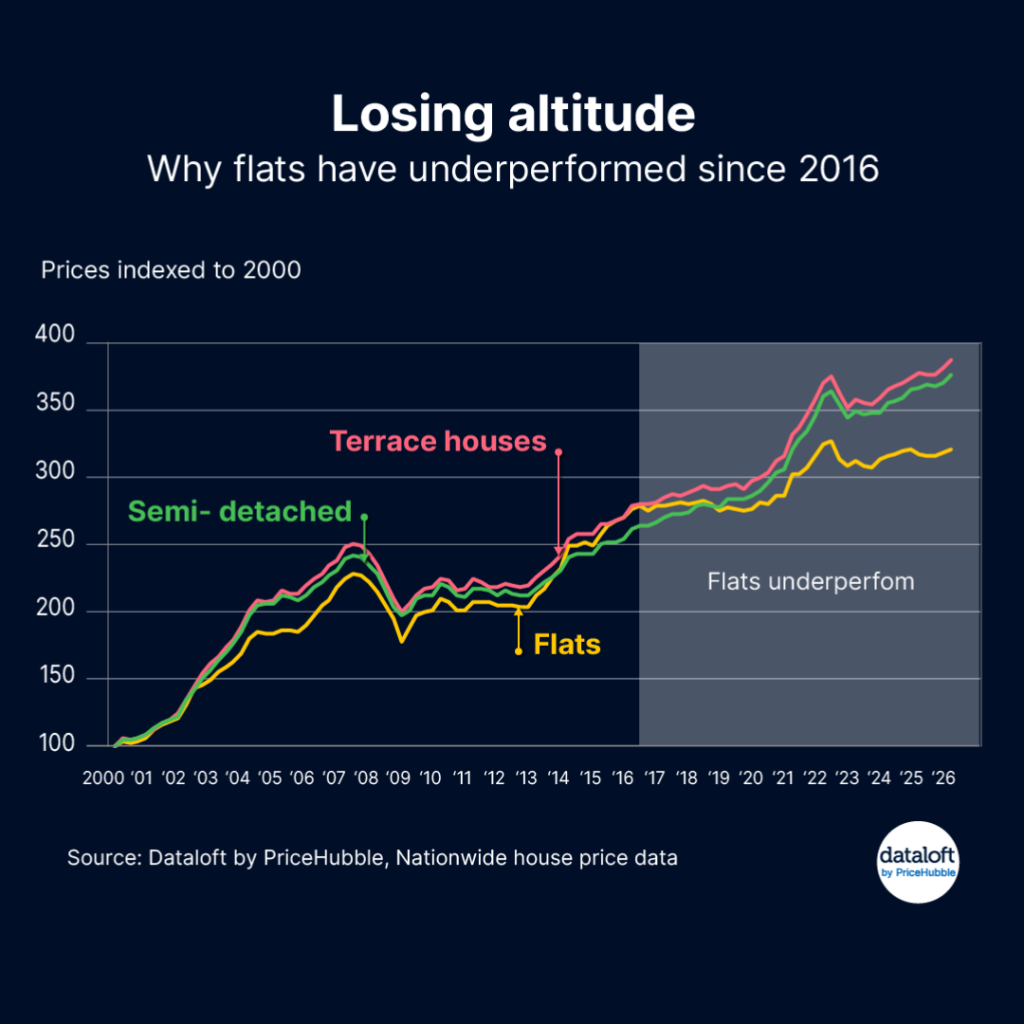
According to analysis from Dataloft by PriceHubble using Nationwide House Price data, average flat prices have risen by just 16% since 2016, compared with 39% for terraced homes and 44% for semi-detached properties.
That is a significant difference, but there is no single explanation for why flats have underperformed. Instead, a combination of tax changes, regulation, changing buyer priorities and the costs associated with apartment ownership has gradually reshaped demand.
For buyers looking at Islington Property, however, that divergence may also be creating opportunities.
The changing buy-to-let market
One of the first noticeable shifts in flat price performance coincided with changes to Stamp Duty Land Tax in 2016.
The introduction of the additional stamp duty surcharge on second homes and investment properties increased the cost of purchasing buy-to-let properties. Flats traditionally represented a significant part of the investment market, particularly in London and other major cities.
Further tax and regulatory changes affecting landlords followed, increasing the financial and administrative pressures associated with owning investment property.
As some landlords began leaving the sector, investor demand for flats weakened.
In markets such as Islington, where apartments make up a substantial proportion of available housing, changes in investor sentiment can have a particularly noticeable effect on activity.
The impact of the building safety crisis
At around the same time, another issue began affecting parts of the apartment market.
Following the emergence of concerns around combustible cladding and building safety, some owners of flats in taller residential buildings found it difficult to sell or remortgage their properties without the necessary fire-safety documentation.
The introduction of requirements such as EWS1 assessments added additional complexity to certain transactions.
Importantly, these issues did not affect every apartment building. However, uncertainty surrounding building safety was significant enough to influence confidence across parts of the wider flat market.
For anyone considering buying an apartment today, understanding the construction, building management and relevant fire-safety documentation remains an important part of the due diligence process.
The pandemic and the "race for space"
A second major shift occurred during and immediately after the pandemic.
With people spending considerably more time at home, buyers increasingly prioritised:
- Additional bedrooms
- Home-working space
- Private gardens
- Balconies and terraces
- Larger living areas
- Access to parks and green spaces
The resulting "race for space" benefited houses, particularly suburban and family properties.
Flats without meaningful outside space were often less attractive by comparison.
While some of these priorities have since moderated, the pandemic permanently changed how many buyers think about their homes.
In areas such as Islington, however, location remains an important counterbalance. Apartments close to Angel, Upper Street, Clerkenwell, King's Cross and the City continue to offer something houses further from central London cannot easily replicate: convenience and connectivity.
Rising service charges and leasehold considerations
Another factor affecting the flat market has been the rising cost of owning some leasehold properties.
Service charges can vary enormously between developments, and buildings offering concierge services, lifts, communal facilities, landscaped grounds or extensive maintenance can carry substantial annual costs.
Potential purchasers are increasingly scrutinising these charges before making an offer.
Lease length, ground rent provisions, major works and the financial position of the managing agent or freeholder can also affect both mortgageability and future resale value.
This means two seemingly similar apartments on the same street can perform very differently depending on the underlying lease and building management.
For buyers researching property agents in Islington, local knowledge becomes particularly valuable when comparing different developments and understanding which factors may affect future demand.
Flats are becoming relatively more affordable
Although slower price growth will be disappointing for some existing owners, there is another side to the story.
Flats have become relatively more affordable compared with houses.
With average prices having increased by around 16% since 2016, compared with 39% for terraces and 44% for semi-detached homes, the price gap between different property types has widened considerably.
That could create opportunities for first-time buyers, downsizers and investors who previously found certain locations unaffordable.
Rather than stretching their budget for a house further away, some purchasers may find they can now secure a well-located apartment within established central London neighbourhoods.
Not all flats perform the same
National averages are useful for identifying trends, but they cannot tell the whole story.
The performance of an individual flat can depend on numerous factors, including:
- Location
- Length of lease
- Service charges
- Ground rent
- Building condition
- Managing agent
- Upcoming major works
- Building safety documentation
- Floor level
- Natural light
- Outside space
- Size and layout
- Transport connections
A well-presented period conversion with a long lease, low service charges and access to a garden is a very different proposition from an apartment in a large development with substantial annual running costs.
This is particularly relevant when assessing the Islington Property market, where Victorian and Georgian conversions sit alongside mansion blocks, purpose-built apartments and modern developments.
Could flats offer better value in 2026?
For buyers willing to undertake careful research, the relative underperformance of flats may represent an opportunity.
After years in which houses have pulled significantly ahead, buyers can potentially access locations, space or quality that would otherwise sit outside their budget.
The important question is not simply whether flats will start outperforming houses again.
It is whether a particular property represents good value relative to its location, condition, running costs and long-term buyer appeal.
That requires looking beyond the asking price.
Thinking of buying or selling a flat in Islington?
Understanding how an individual property fits within the wider market is increasingly important.
If you own an apartment and would like to understand how its value has changed, Engletons can provide a flat valuation in Islington based on recent comparable sales, current competition and local buyer demand.
We also provide property valuation in Islington and house valuation in Islington for homeowners considering their next move.
As independent estate agents in Islington, our team combines detailed local market knowledge with bespoke property marketing designed to position each home individually rather than relying solely on wider market averages.
Whether you are selling, buying, letting or require Property management in Islington, speak to Engletons Estate Agents for a clearer understanding of the local market.
Independent by Choice. Exceptional by Design.
Source: Dataloft by PriceHubble, Nationwide House Price data.
You might also be interested in
Sep 22, 2026
Islington’s Prime Property Market: A Long-Term Story of Growth
Islington has long been one of London’s most distinctive residential markets. From the elegant Georgian terraces of Barnsbury and Canonbury to period conversions, contemporary apartments and individua

Aug 18, 2026
UK Property Buying Reform: What the Government’s New Plans Could Mean for Buyers, Sellers and Estate Agents
In June 2026, the UK Government published its Home Buying and Selling Reform Roadmap, setting out plans to modernise a property transaction system that has long been criticised for delays, duplication