
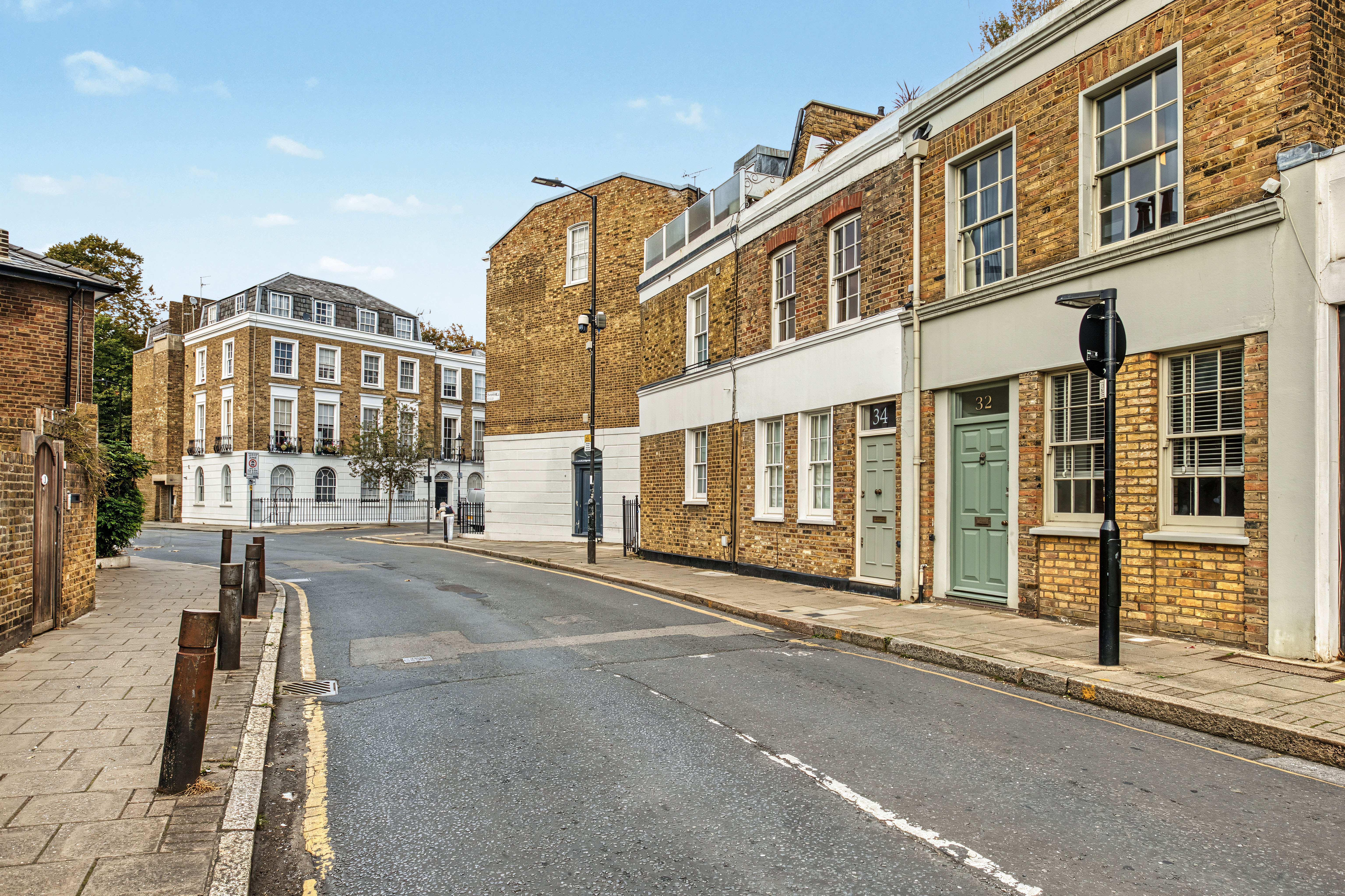
Islington N1 has long been one of London’s most distinctive residential locations, combining period architecture, excellent transport connections and a lively neighbourhood atmosphere with the convenience of being close to the City.
New local profile data from Dataloft by PriceHubble provides an interesting snapshot of the people, homes and amenities that shape the N1 property market. From its exceptionally high population density to its abundance of listed buildings and strong transport connections, the figures help explain why Islington property continues to attract such a broad range of buyers, tenants and investors.
A growing population in the heart of London
There are approximately 92,929 people living within the Islington N1 area, according to the Dataloft local profile.
Between 2011 and 2021, the population increased by 10.3%, highlighting the continued appeal of this part of London as a place to live.
Density is particularly striking, with approximately 158.7 people per hectare, compared with a regional average of 55.9. This is very much an urban neighbourhood, where homes, businesses, restaurants, cultural venues and transport links are all closely interconnected.
The wider London Borough of Islington is itself one of the most densely populated areas in England. Census 2021 recorded around 216,600 residents across the borough, with the population increasing by 5.1% between 2011 and 2021. Office for National Statistics
42,150 homes and a market dominated by flats
The N1 local profile identifies approximately 42,150 dwellings, with flats accounting for 84.6% of the housing stock and houses representing 15.4%.
That housing mix is an important consideration when looking at the local property market. N1 encompasses everything from purpose-built apartments and converted period properties to Georgian and Victorian terraces and some exceptional individual houses.
Only 26.9% of households own their homes, while 31.3% live in privately rented accommodation, according to the local profile.
This is broadly consistent with the wider Islington picture. Census 2021 data shows that home ownership across the borough stood at 26.7%, while 31.2% of households were privately renting. Office for National Statistics
For letting agents in Islington, these figures demonstrate the significance of the private rental sector within the local housing market.
A neighbourhood rich in architectural heritage
One of N1's defining characteristics is its architecture.
The local profile records an impressive 563 listed buildings, a figure higher than the regional benchmark. Walk through areas such as Barnsbury, Canonbury, Angel and the streets surrounding Upper Street and this heritage is immediately apparent.
Period terraces, garden squares, converted warehouses, former commercial buildings and contemporary developments create an unusually varied housing stock.
For buyers considering Islington property, this means two apparently similar homes can have very different values depending on their street, architecture, condition, outside space, tenure and immediate surroundings. It is one reason an accurate property valuation in Islington requires detailed knowledge at street and property level rather than relying solely on postcode averages.
Exceptional connectivity
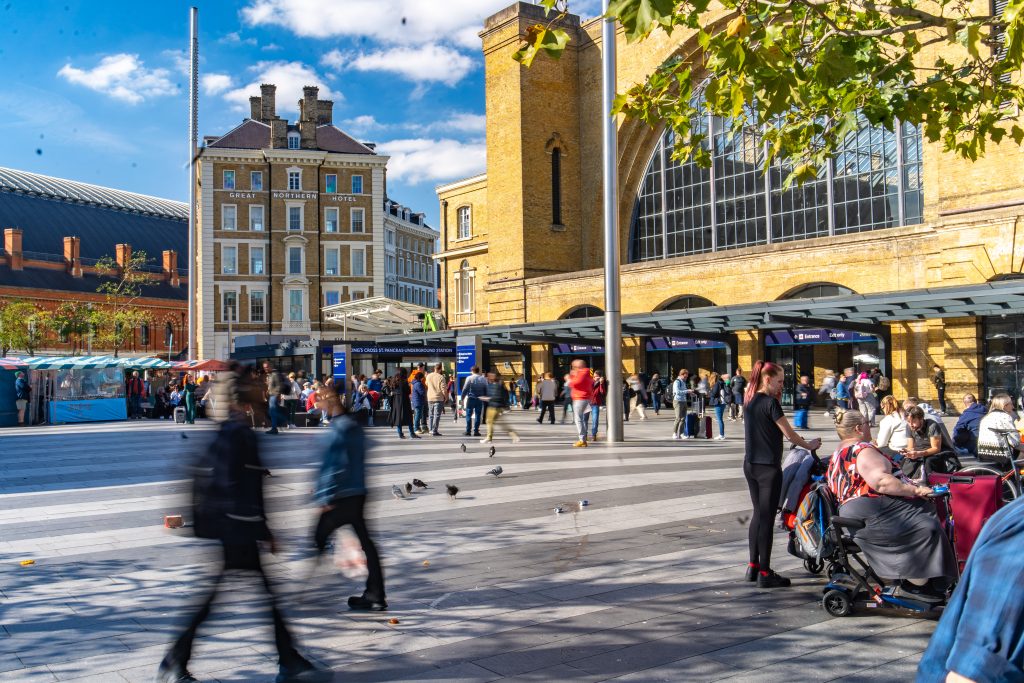
Transport remains one of N1's major strengths.
According to the Dataloft profile, 82.5% of homes are within 200 metres of a bus, train or Underground connection, compared with a regional average of 79%.
Residents also benefit from access to stations including Angel, Highbury & Islington, Essex Road and numerous bus routes, with King's Cross and St Pancras close by.
For professionals working in the City, West End or elsewhere across London, this accessibility is a major part of N1's attraction.
Digital connectivity is equally strong. The profile reports an average broadband speed of 139 Mbps, while 90% of homes have access to ultrafast broadband, ahead of the 85% regional benchmark.
Who lives in Islington N1?
The demographic profile provides another insight into the character of the neighbourhood.
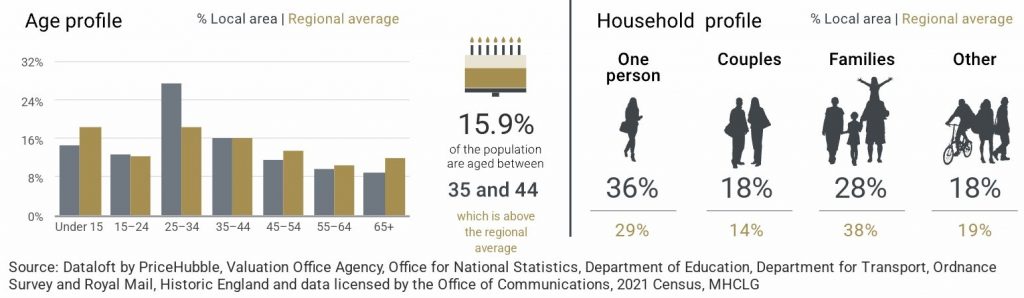
People aged 25 to 34 form the largest age group, while 15.9% of residents are aged between 35 and 44, a proportion above the regional average.
Household composition also reflects the urban nature of N1:
- 36% are one-person households
- 18% are couples
- 28% are families
- 18% fall into other household types
The relatively high proportion of one-person households helps explain the importance of apartments and smaller properties within the local sales and rental markets.
At the same time, Islington's period houses, garden squares and residential streets continue to appeal to families looking for more space while remaining in central London.
Green space may be limited, but lifestyle is not
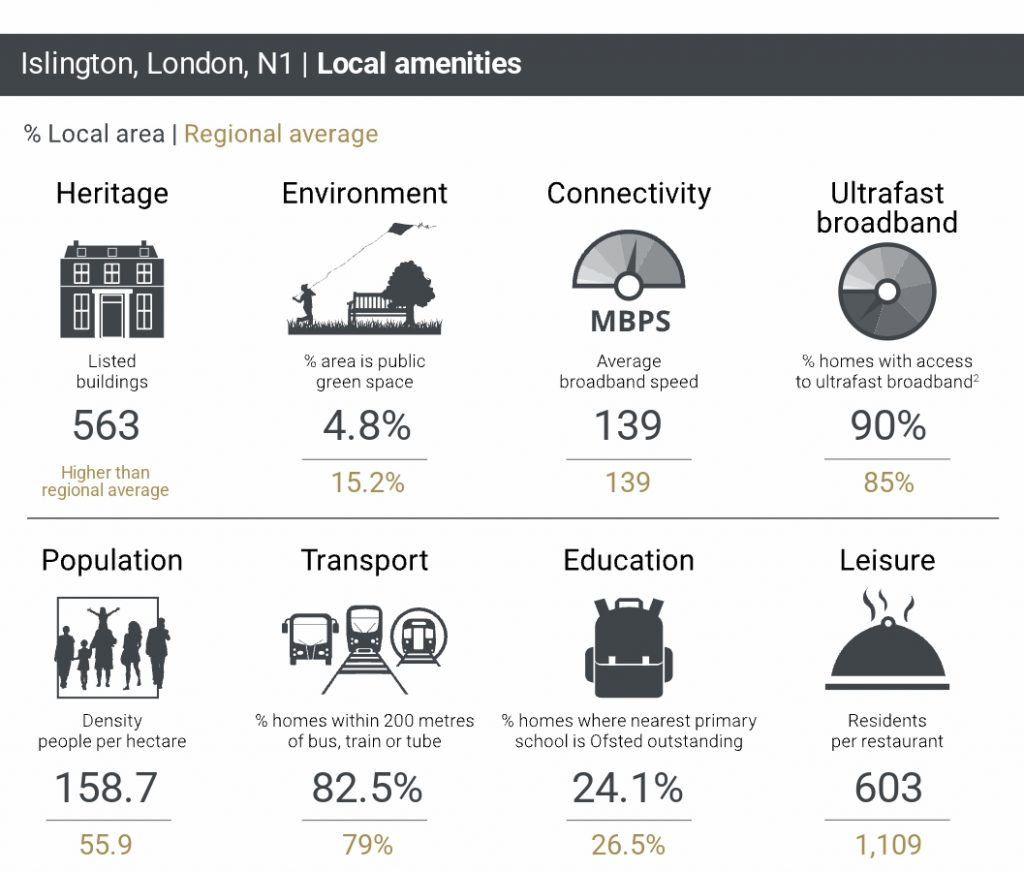
Public green space accounts for approximately 4.8% of the N1 area, below the regional average of 15.2%.
However, residents have access to established local green spaces alongside nearby destinations such as Highbury Fields, Regent's Canal and a network of smaller gardens and squares.
Where Islington particularly stands out is its concentration of amenities.
The local profile estimates approximately 603 residents for every restaurant, compared with a regional average of 1,109. This gives an indication of just how densely packed the area's hospitality offering is.
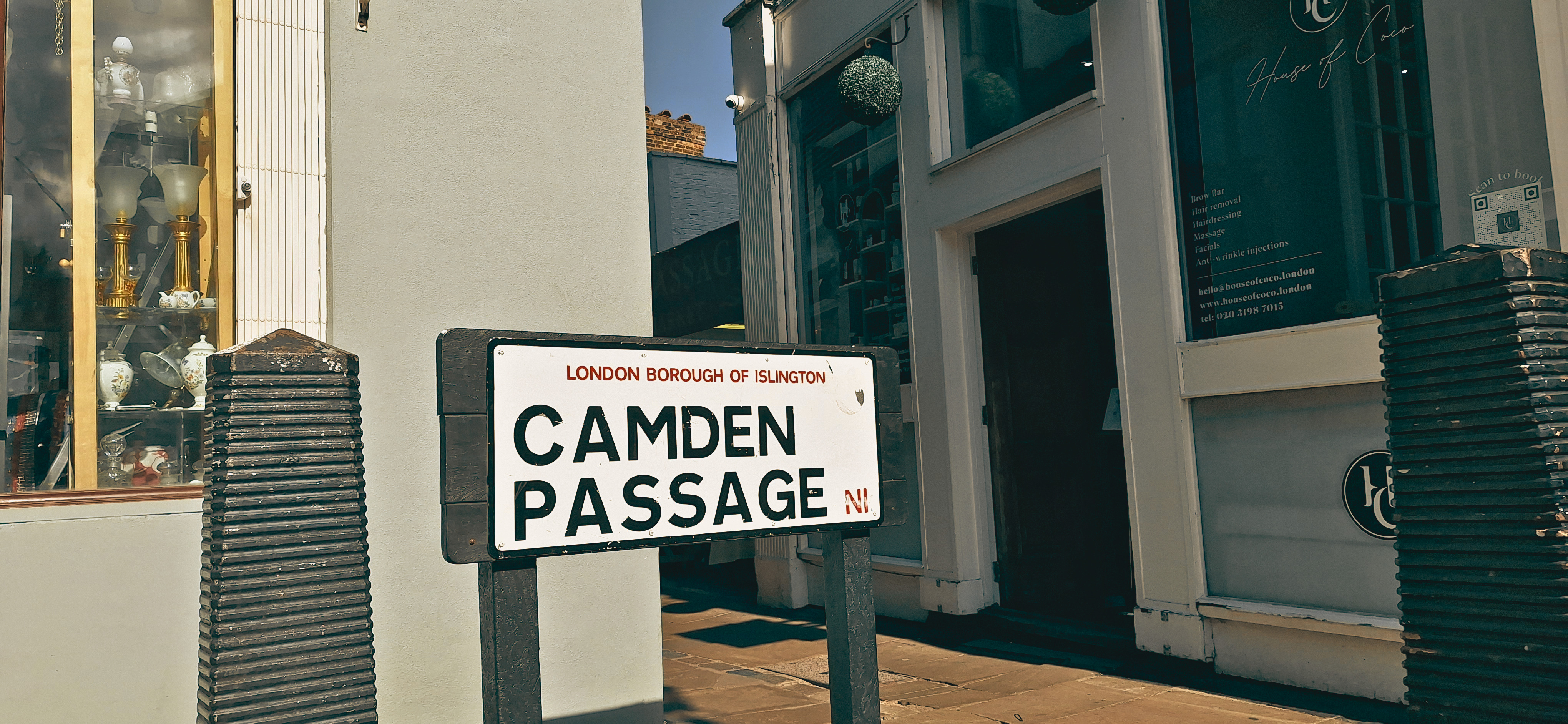
Upper Street, Camden Passage and the surrounding neighbourhoods provide an extensive mix of independent cafés, restaurants, pubs, boutiques, theatres and specialist shops, contributing significantly to the lifestyle associated with living in N1.
Education and families
The profile also shows that 24.1% of primary schools serving the area are rated Outstanding by Ofsted, compared with a regional benchmark of 26.5%.
For family buyers, however, school catchments can be extremely localised. The relationship between a particular address, admissions criteria and nearby schools should therefore be investigated individually when considering a move.
New homes remain relatively limited
Despite strong demand for housing, development within this established part of London is naturally constrained.
The Dataloft profile records 480 new homes completed over the last five years, equivalent to an average of 96 per year.
With established residential streets, conservation areas and a significant number of heritage properties, opportunities to substantially increase housing supply can be limited.
This combination of restricted supply, central London connectivity, architectural character and strong local amenities helps underpin the long-term appeal of the N1 property market.
What does this mean for Islington homeowners?
Local statistics provide useful context, but property values within N1 can vary considerably from one street to another and sometimes from one side of a street to the other.
Property type, square footage, condition, outside space, aspect, lease length, service charges and exact location can all influence what buyers are prepared to pay.
For homeowners considering selling, obtaining a professional house valuation in Islington or flat valuation in Islington can therefore provide a much clearer picture than relying on broad online estimates.
At Engletons Estate Agents, our team combines local market knowledge with detailed comparable evidence and current buyer demand to provide realistic advice on positioning a property for the market.
Whether you are thinking of selling, letting or simply want to understand what your property may be worth today, speak with our property agents in Islington for a local market appraisal.
Engletons Estate Agents
30 Penton Street, Islington, London N1 9PS
020 7278 1710
info@engletons.com
Data source: Dataloft by PriceHubble, Valuation Office Agency, Office for National Statistics, Department for Education, Department for Transport, Ordnance Survey, Royal Mail, Historic England, Ofcom, Census 2021 and MHCLG. Local profile data supplied October 2026.
You might also be interested in
Oct 15, 2026
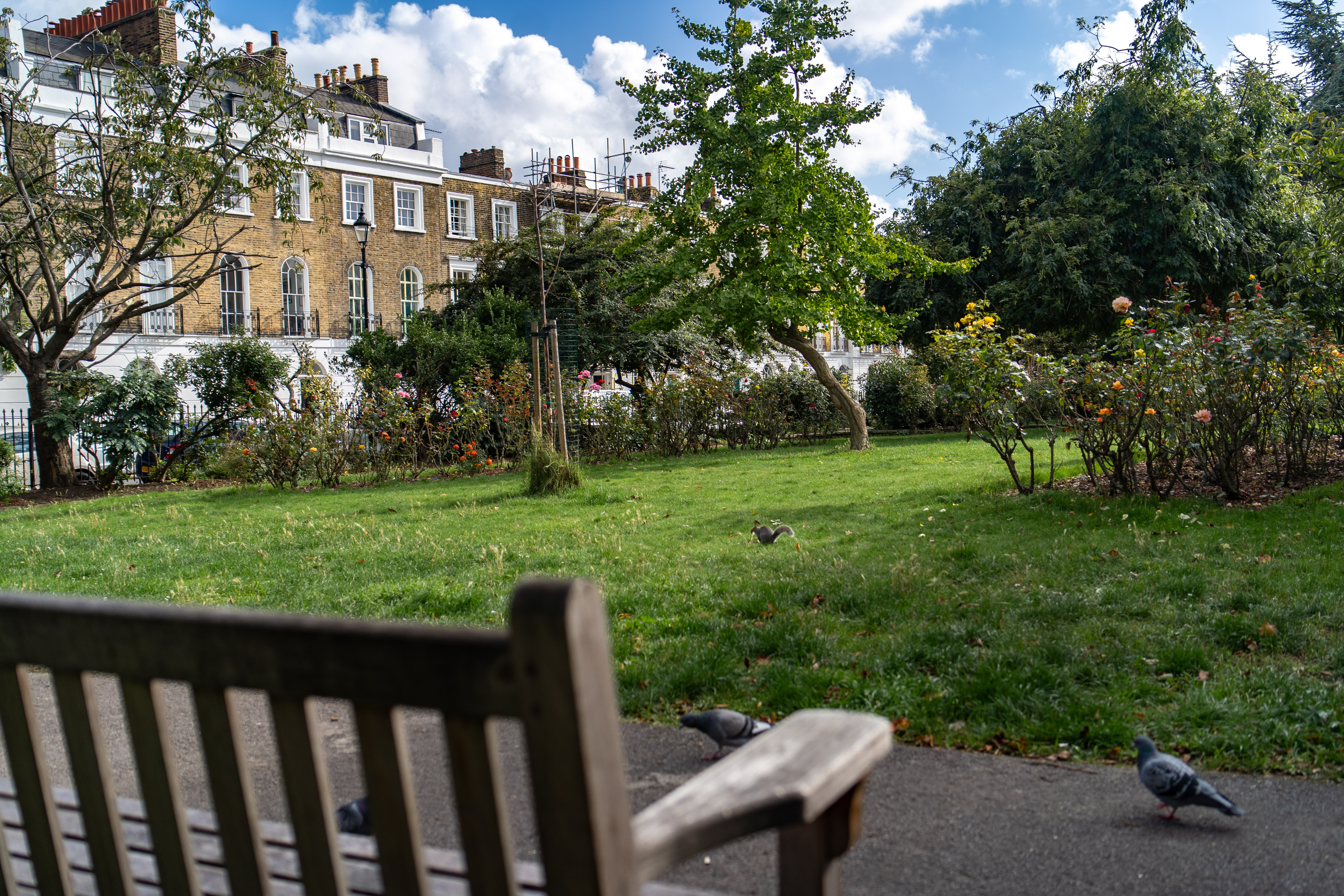
Gibson Square, Islington: Georgian Elegance, Hidden History and Timeless London Living
Discover one of Islington's most characterful garden squares, where historic architecture, peaceful green spaces and a vibrant neighbourhood lifestyle come together. Just moments from the energy of U
Sep 16, 2026
Camden Passage, Islington: Antiques, Independent Shops and Local Character in the Heart of Angel
Tucked just behind the bustle of Upper Street, Camden Passage is one of those places that captures what makes Islington so distinctive. A pedestrianised network of narrow streets and historic building